FREE DELIVERY
ON ORDERS OVER R1500

The Venus Fly Trap is probably the most famous carnivorous plant in the world! With its fascinating snapping traps and remarkable hunting mechanism, it’s often the plant that first sparks a lifelong obsession with carnivorous plants.
Despite their dramatic appearance, Venus Fly Traps are surprisingly easy to grow once you understand their basic needs. Give them plenty of sunlight, the right water, nutrient-poor growing media, and a well-deserved winter rest, and they’ll reward you with healthy growth and plenty of hungry traps!
Whether you’re growing your very first Venus Fly Trap or adding another variety to your collection, this guide will help you keep your little green predator happy and thriving.

If there’s one thing to remember about growing Venus Fly Traps, it’s this:
Venus Fly Traps LOVE full, direct sunlight!
Aim for at least 6 hours of direct sunlight every day, although 8 hours or more is even better when conditions allow. Plenty of sunshine encourages strong, healthy growth, vibrant trap colours, and vigorous plants.
Venus Fly Traps generally thrive outdoors, making a sunny patio, balcony, or garden the perfect home for your little green predator.
Indoor windowsills often don’t provide enough direct sunlight, even when the room appears bright. Without sufficient light, plants gradually become weak, produce smaller traps, and lose their beautiful colouration.
My tip: Don’t be afraid of sunshine! Once properly acclimatised, your Venus Fly Trap will generally be much happier outdoors in a sunny position than sitting inside on a windowsill.
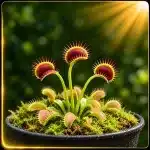
Our Venus Fly Traps are sold as mature, established plants, already accustomed to good sunlight in our greenhouse. This means they generally require very little acclimatisation when they arrive at their new homes.
After shipping, give your plant a good drink of suitable water and place it in a bright, sunny position. Keep in mind, however, that greenhouse coverings filter some of the sun’s intensity. If you’re moving your plant directly into strong, unfiltered outdoor sunlight, introduce it gradually over a few days to help prevent unnecessary leaf scorch.
Don’t panic if a few older traps turn black during the transition. This can be perfectly normal after shipping and a change of environment. As long as the growing point remains healthy and new traps are developing, your plant is usually settling in just fine.
If your Venus Fly Trap has been growing in a shaded environment, it will need a little more time to adjust to full sunlight.
Start with gentle morning sunshine, then gradually increase its exposure to direct sunlight over approximately 7–14 days. This allows the plant to adapt to the stronger light without unnecessary leaf scorch.
Once properly acclimatised, your Venus Fly Trap will be happiest in a position receiving plenty of direct sunlight throughout the day.
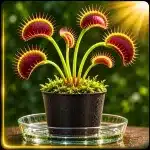
When it comes to watering your Venus Fly Trap, there’s one golden rule: the purer the water, the happier your plant!
Always use low-mineral water, preferably:
Ordinary tap water can contain dissolved minerals that gradually accumulate in the growing medium and damage your plant’s sensitive roots. If you have no alternative, using tap water briefly in an emergency is better than allowing your plant to dry out. Return to pure water as soon as possible and thoroughly flush the growing medium from above.
Venus Fly Traps love consistently moist growing conditions, but that doesn’t mean their roots should remain permanently waterlogged.
The easiest method is to stand the pot in a shallow tray containing approximately 1–2 cm of pure water. This allows the growing medium to absorb moisture naturally from below.
When conditions allow, let the tray empty briefly before refilling. This helps avoid keeping the pot constantly submerged. During particularly hot or windy weather, however, refill as needed to prevent the growing medium from drying out.
Important: Never allow the growing medium to dry out completely!
I also recommend giving your Venus Fly Trap a thorough top watering approximately once a week using pure water. Allow the excess to drain away rather than collecting it back in the tray.
This helps flush out any dissolved minerals that may have accumulated in the growing medium and keeps conditions fresher around the roots.
During winter dormancy, reduce watering as the plant’s growth slows. Keep the growing medium lightly moist, rather than constantly saturated.
Remember: Moist, not flooded, is the key!

Venus Fly Traps naturally grow in nutrient-poor, acidic soils. Unlike most garden plants, they don’t appreciate rich soil or added fertiliser. In fact, these can seriously damage their sensitive roots!
Never use ordinary potting soil, compost, manure, or growing mixes containing fertiliser.
A simple, reliable growing medium consists of:
This combination retains moisture while providing good aeration around the roots. Always moisten the mixture thoroughly with rainwater, distilled water, or reverse osmosis (RO) water before potting.
Venus Fly Traps develop surprisingly long roots, so choose a pot with drainage holes and enough depth to accommodate them comfortably. Plastic pots are generally a good choice, as they don’t release minerals into the growing medium.
Repot your Venus Fly Trap when it outgrows its container, becomes overcrowded, or approximately every 1–2 years to refresh the growing medium.
Late winter or early spring, just as the plant begins waking from dormancy, is generally the ideal time.
Think of it like washing your bedding. Nothing beats crawling into bed with freshly washed linen! Your Venus Fly Trap appreciates a fresh start, too. 😎
Don’t feel like mixing your own? You can purchase our ready-to-use Carnivorous Plant Soil from the Accessories section of our website.
For more detailed guidance, including how to repot your plant safely, visit our Repotting 101 guide.
Let them Catch their own Dinner
When grown outdoors, Venus Fly Traps are perfectly capable of catching all the insects they need. They’re surprisingly good little hunters!
Sunlight provides the energy they need to grow, while insects supply additional nutrients. There’s no need to feed them yourself or worry if they haven’t caught anything recently.
If you absolutely cannot resist treating your little predator to a meal, keep these golden rules in mind:
Each trap can only close a limited number of times before it eventually dies and is replaced by new growth. So resist the temptation to play with those hungry little mouths!
Remember: A well-grown Venus Fly Trap needs plenty of sunshine far more than it needs you to feed it.
Want to learn more about their fascinating eating habits? Read my blog on feeding carnivorous plants.
Keeping unwanted Visitors Away
Even our hungry little predators aren’t completely immune to pests! Venus Fly Traps are generally quite resilient, but occasionally a few unwelcome visitors may move in.
The most common culprits include:
Inspect your plant regularly, particularly around the growing point and newly developing traps. Catching a pest problem early makes it much easier to manage.
For minor infestations, carefully remove visible pests or rinse them away with a gentle stream of pure water.
For more persistent problems, a suitable insecticide may be necessary. Pyrethrin-based products and some cypermethrin formulations are options, but not all insecticide products are suitable for Venus Fly Traps. Check the formulation and label carefully, avoid unnecessary additives, and test a small area before treating the entire plant.
Always follow the manufacturer’s instructions and avoid spraying during the hottest part of the day.
Remember: Regular inspection is your best defence. A healthy plant and early intervention can prevent most pest problems from becoming serious.
To Chill or Not to Chill.
Venus Fly Traps are warm-temperate plants that enjoy hot summers and cool winters. They’re surprisingly tough little characters when grown in the right conditions!
During the growing season, temperatures of approximately 20–35°C are ideal, although established plants can tolerate hotter conditions provided their roots remain moist and they receive adequate water.
In winter, cooler temperatures are not only tolerated but are actually beneficial, helping the plant enter its natural dormancy period.
Venus Fly Traps can tolerate occasional light frost, particularly when dormant. However, prolonged hard freezes can damage their roots and growing points, especially when grown in pots.
If you live in an area where your swimming pool or dam regularly freezes over, it’s time to give your little predators some extra protection!
During severe cold spells, move your plants into an unheated garage, sheltered greenhouse or another cool, protected position. They should remain cool enough to continue their winter dormancy, rather than being moved into a warm living room.
Remember: Warm summers, cool winters and protection from extreme freezing conditions will keep your Venus Fly Traps happy throughout the seasons.
THE BIG SNOOZE!
Venus Fly Traps require an annual winter dormancy period to remain healthy over the long term. THIS IS NOT OPTIONAL!
As the days become shorter and temperatures drop, your little predator begins slowing down and preparing for a well-deserved winter rest.
During winter dormancy, you may notice:
THIS IS COMPLETELY NORMAL. DO NOT PANIC! 
As long as the underground rhizome remains healthy, your Venus Fly Trap can emerge from dormancy with vigorous new growth when spring arrives.
With cooler temperatures and slower growth, your plant will need considerably less water than during summer.
Keep your plant in a cool, naturally lit position during dormancy, protecting it from prolonged hard freezes.
As temperatures rise and daylight hours increase, your Venus Fly Trap will gradually wake up and begin producing fresh traps again.
Be patient! Some plants wake up earlier than others, and a slow start doesn’t necessarily mean something is wrong.
Want to understand more about this fascinating seasonal cycle? Read my guide to Winter Dormancy in Carnivorous Plants.
Nursery visits are by arrangement only
I’d love to connect with you
Follow me on social media
Copyright © 2024 Curry's Post Carnivores & Leon Nieuwoudt - All Rights Are Reserved