Description
Why Nepenthes – Rebecca Soper Stands Out
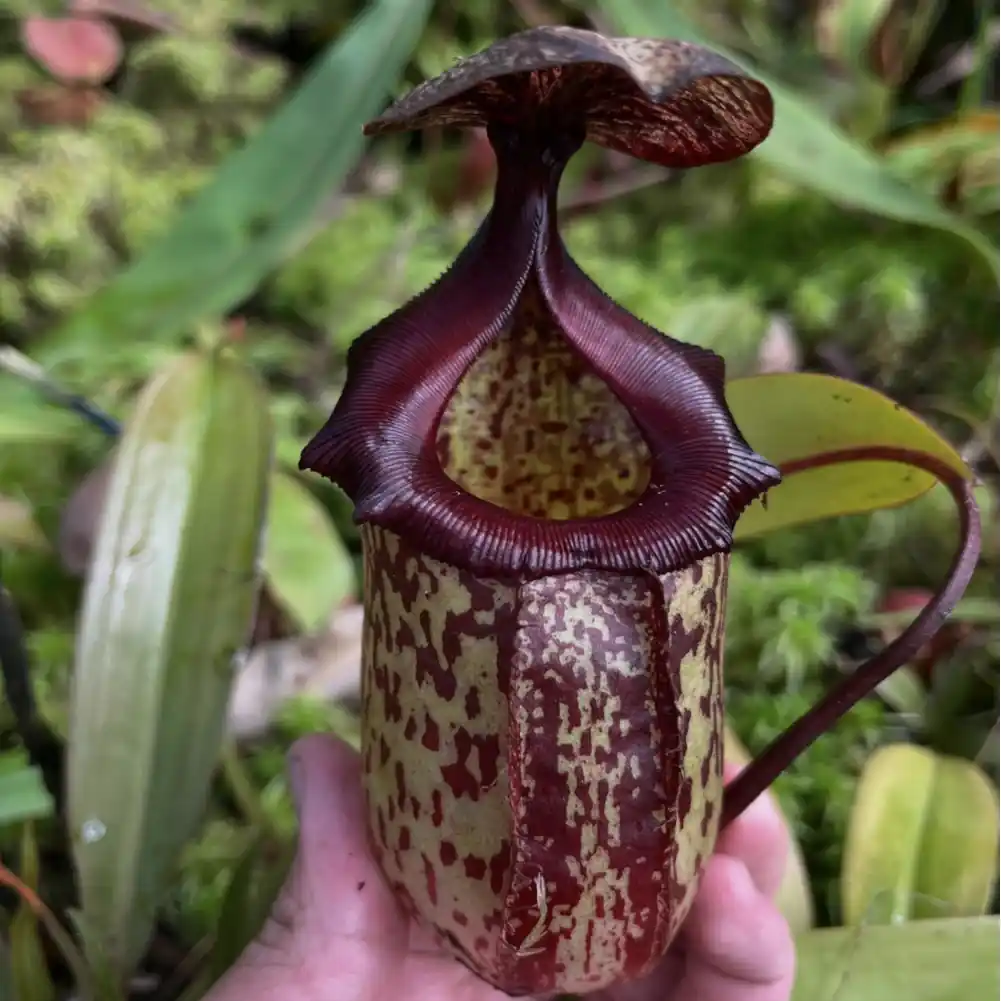
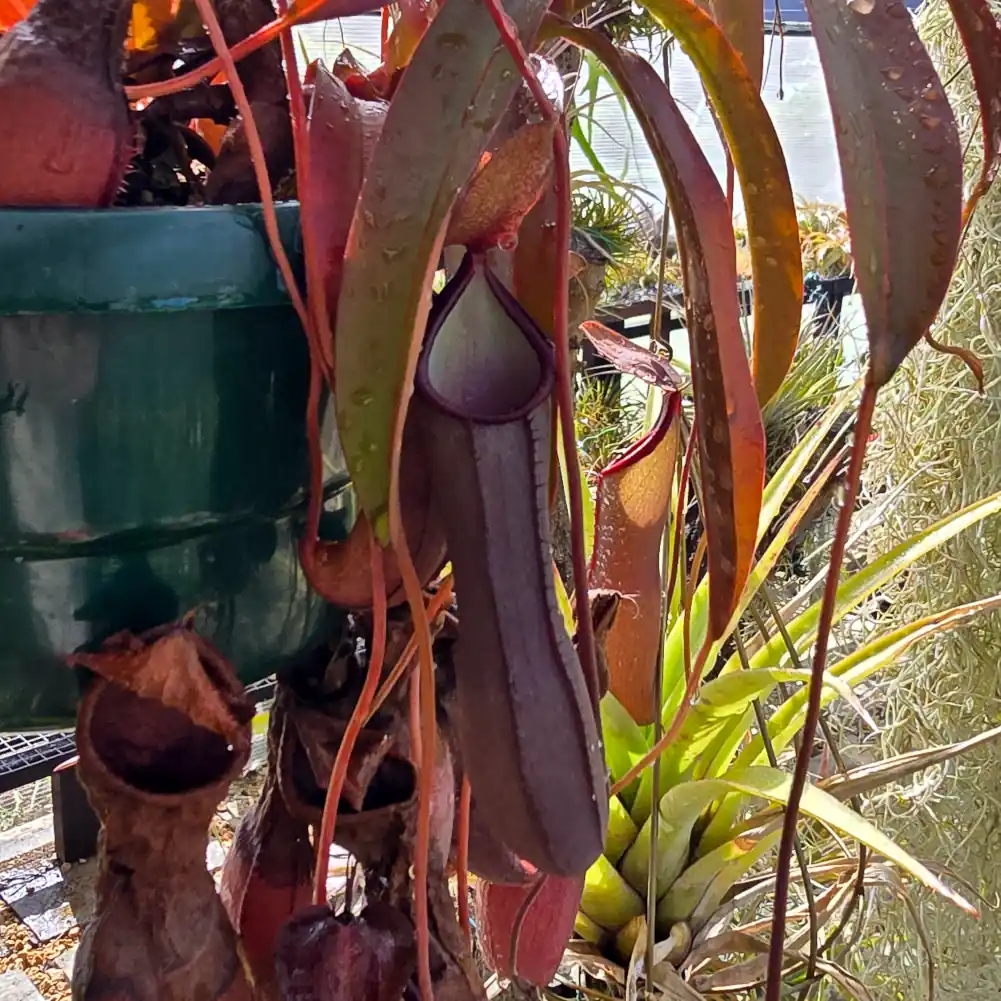
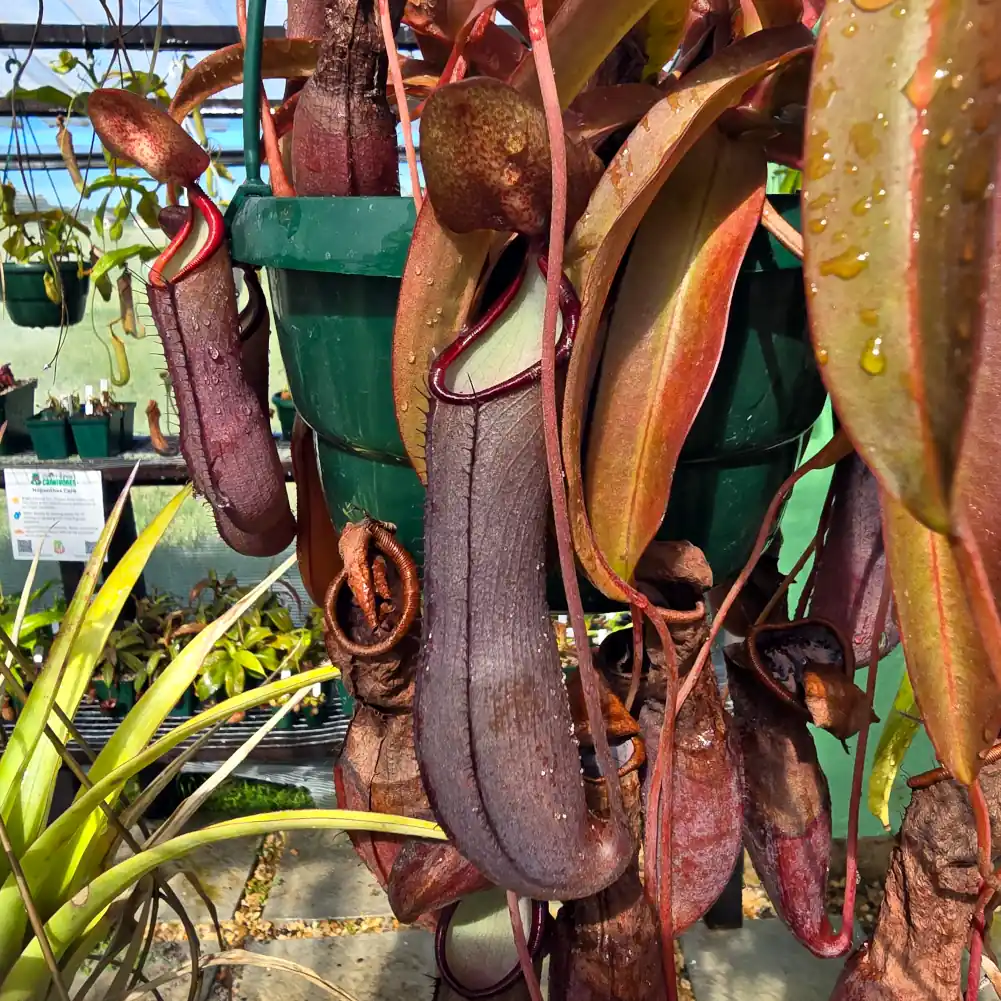
Nepenthes ‘Rebecca Soper’ is widely regarded as one of the finest and most reliable hybrid pitcher plants for both beginners and seasoned growers alike. A classic cross between Nepenthes ampullaria and Nepenthes ventricosa, this exceptional hybrid inherits the robust hardiness and hourglass waist of its vintage parentage while developing an intensely rich, dark plum-red coloration.
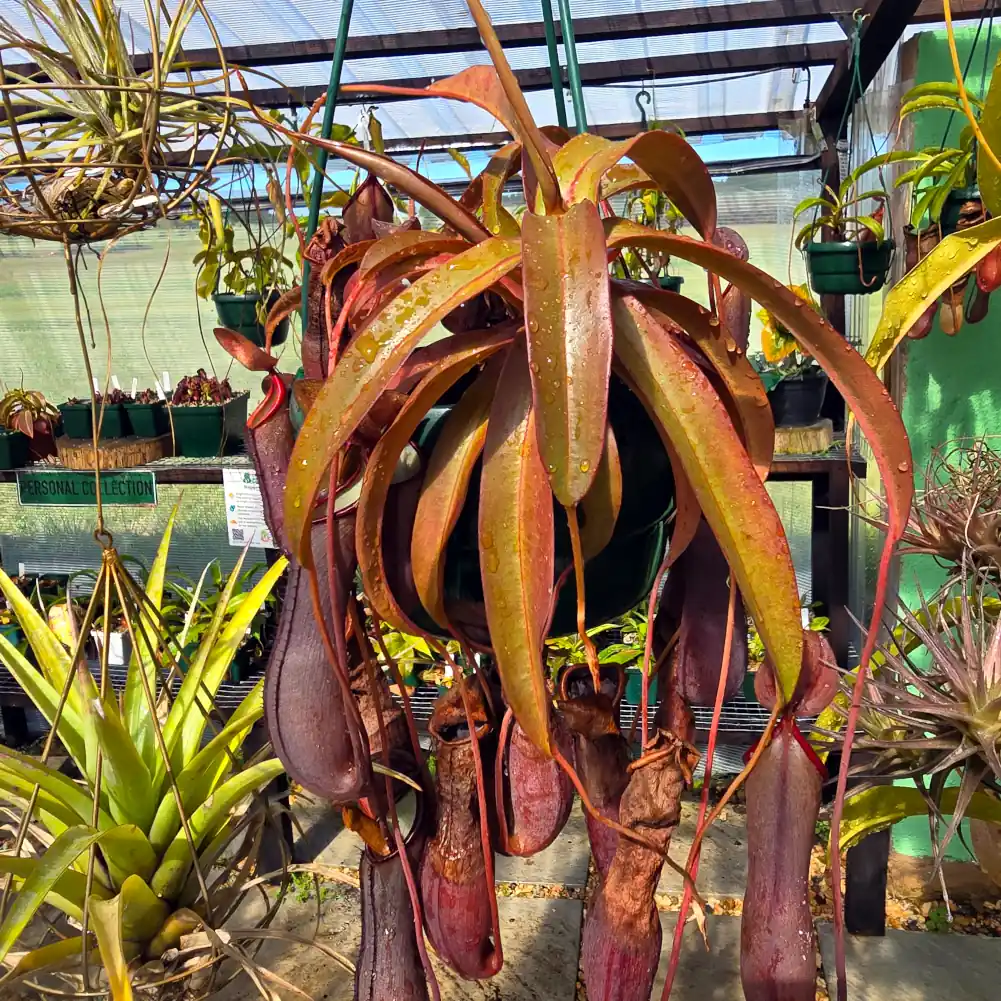
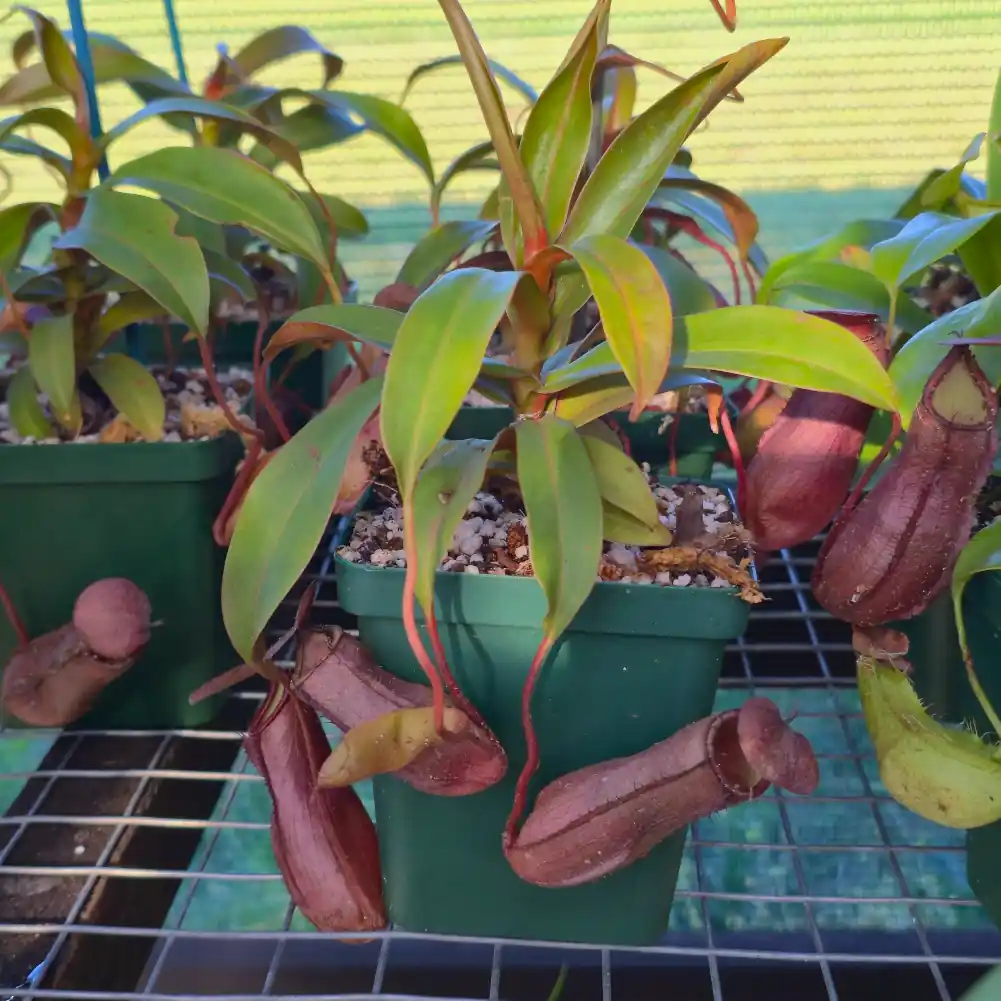
As the glossy, rigid pitchers mature under bright, indirect light, they flush into a deep, solid maroon to almost black-purple tone. Exceptionally vigorous and free-pitchering, Nepenthes ‘Rebecca Soper’ adapts readily to indoor household conditions and greenhouse environments, producing clusters of striking dark urns year-round.
Key Highlights & Characteristics
- Deep Plum-Red Pigmentation: Pitchers mature into a striking, glossy dark burgundy to near-black hue.
- Classic Hybrid Vigor: Combines the bulbous basal energy of N. ampullaria with the tough waistline of N. ventricosa.
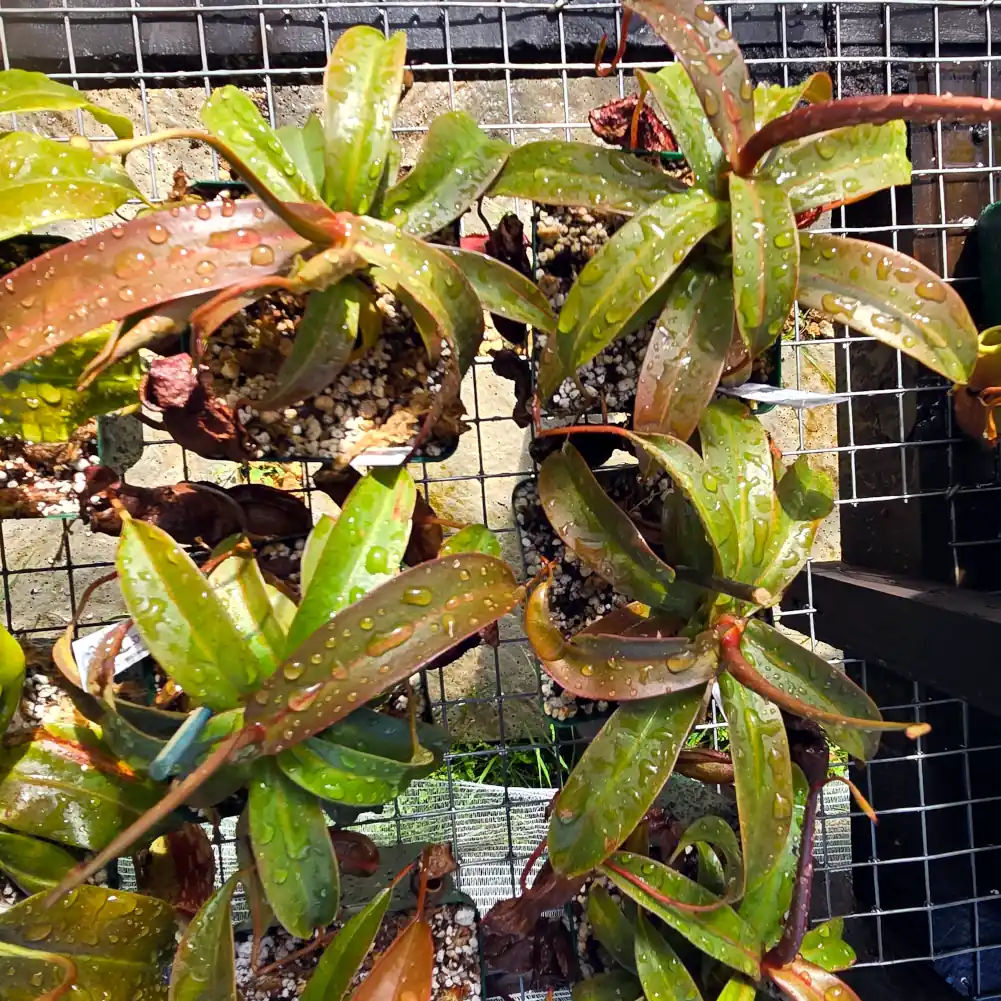
- Year-Round Production: Continuously produces new pitchers under stable indoor or greenhouse conditions.
- Household Adaptability: Highly resilient and forgiving, making it an ideal choice for indoor windowsill growing.
Basic Nepenthes Care Summary
- Light: Bright, indirect light (a sunny windowsill or under full-spectrum grow lights). Avoid harsh midday direct sun.
- Water: Keep the potting mix consistently damp, never soggy or bone-dry. Use Distilled water, Reverse Osmosis, or Rainwater ONLY.
- Soil: Light, ultra-airy, and well-draining mix (equal parts long-fiber sphagnum moss and perlite).
- Feeding: Supplement occasionally by dropping dried mealworms, crickets, fish food pellets or bloodworms into active pitchers. Adding NOVION weekly into the pitchers or as a foliar spray will also greatly benefit the plant. Never apply soil fertilizers.
- Temperature: Thrives in intermediate conditions (20°C to 30°C daytime, with slightly cooler nights).
- Dormancy: Tropical plant; requires no winter dormancy and grows steadily year-round.
For more detailed information on care, please visit our Care Guides pages.