
Description
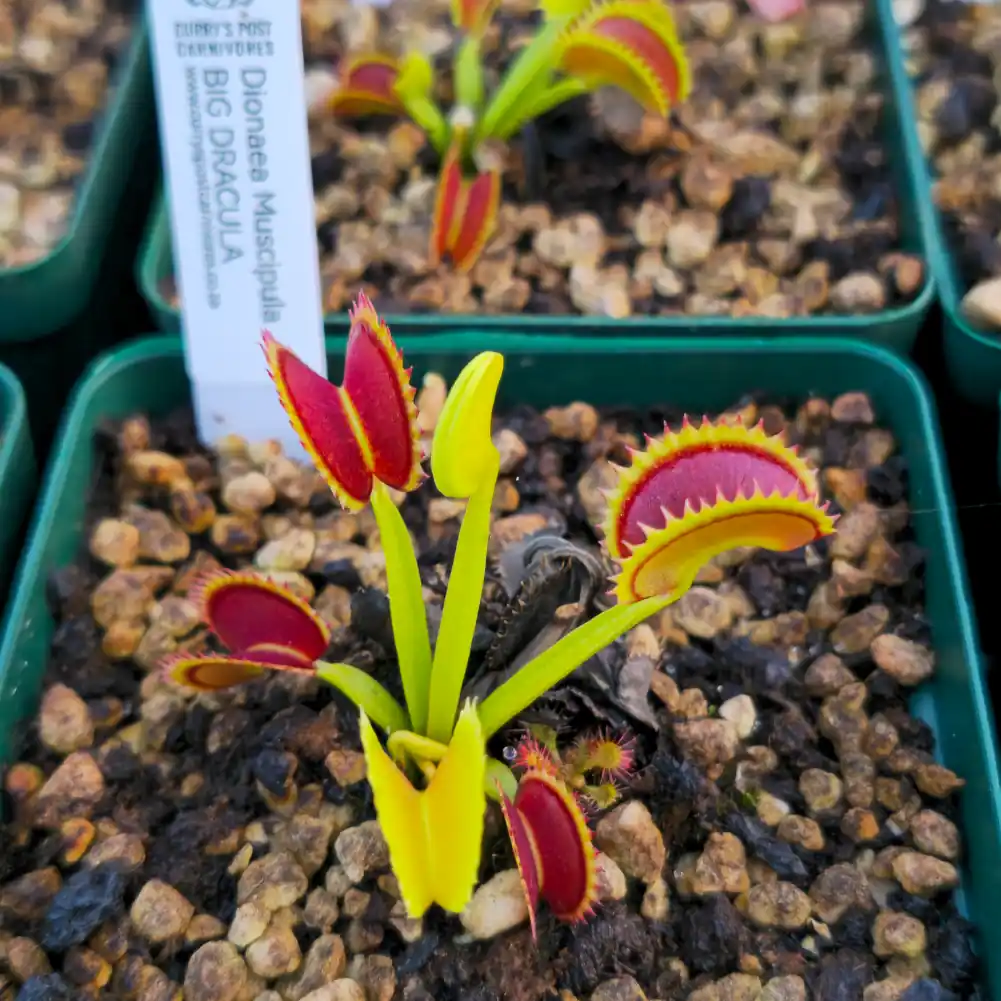
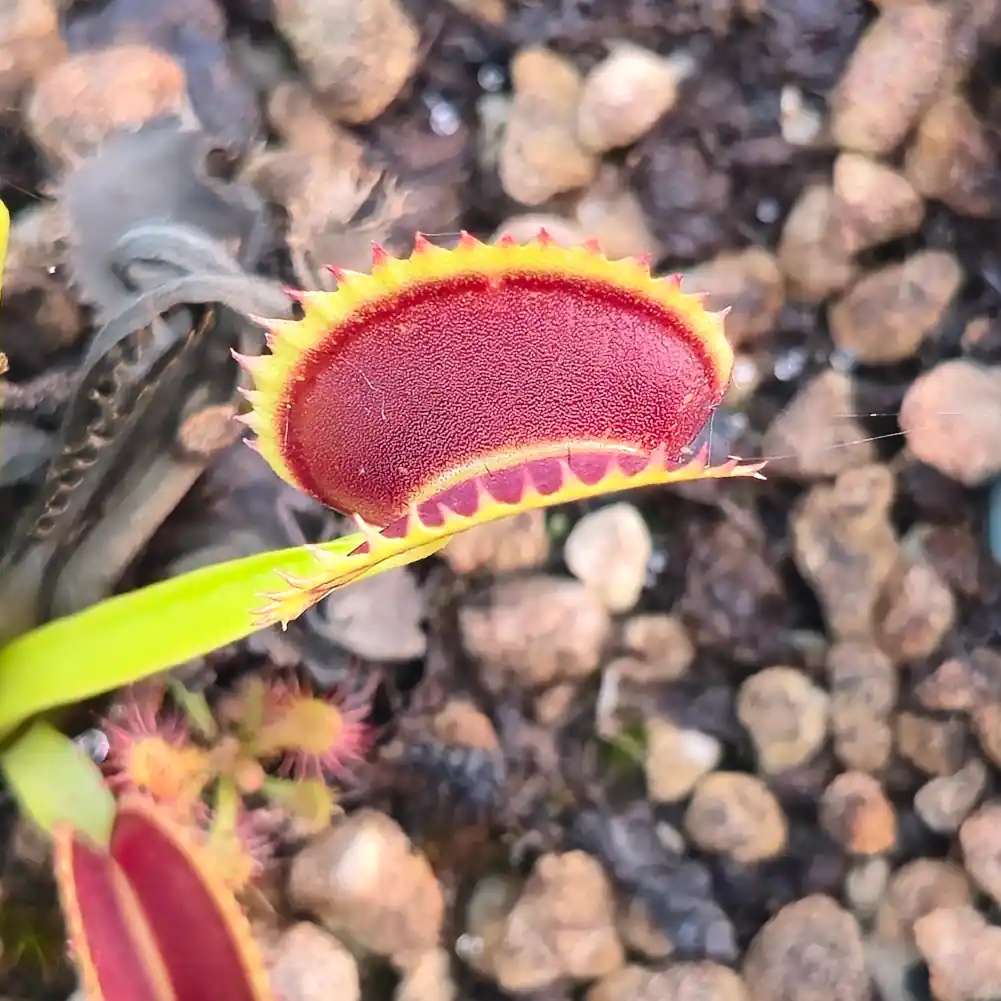
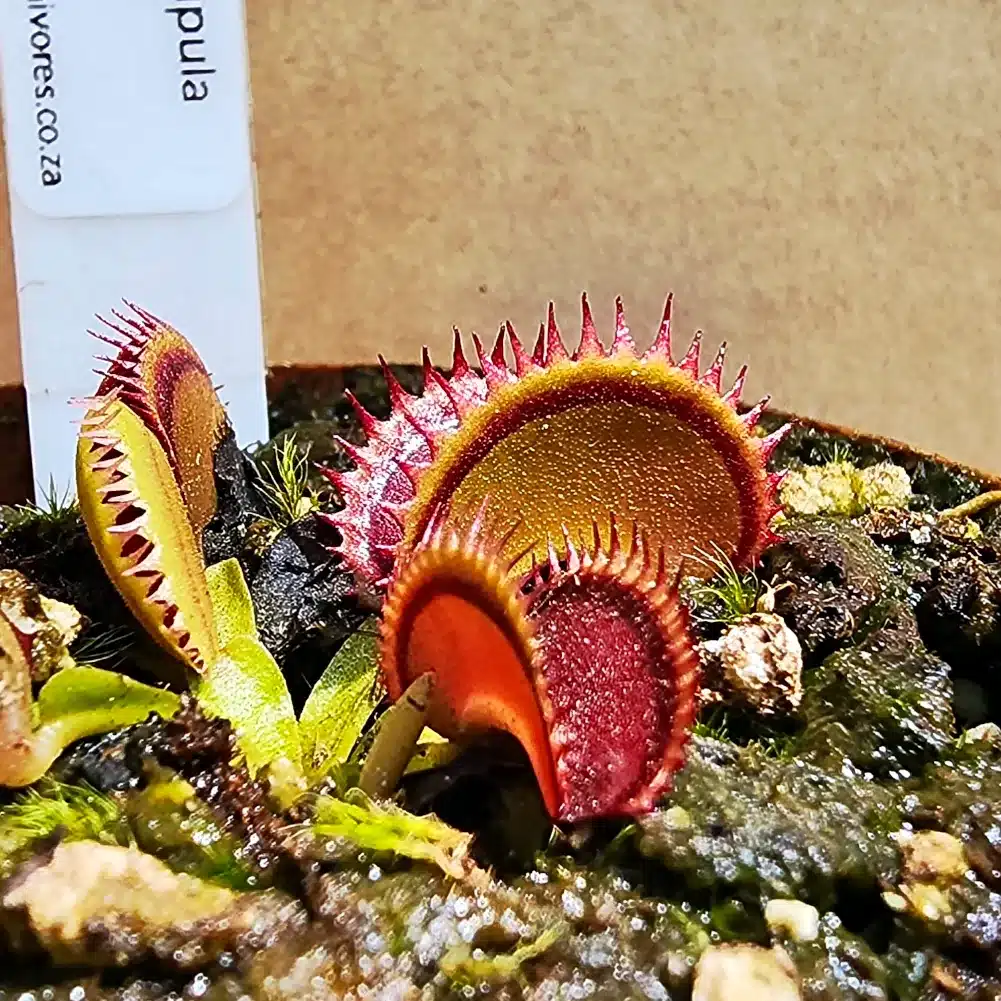
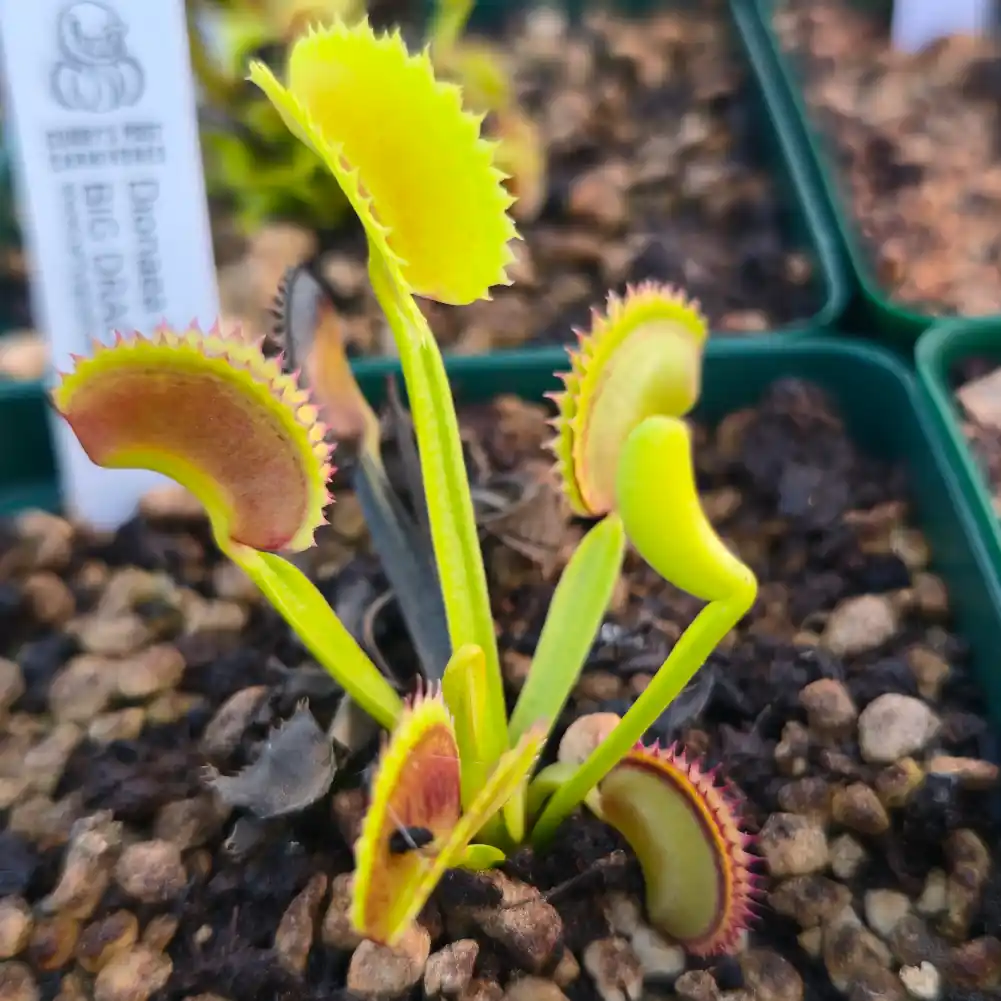
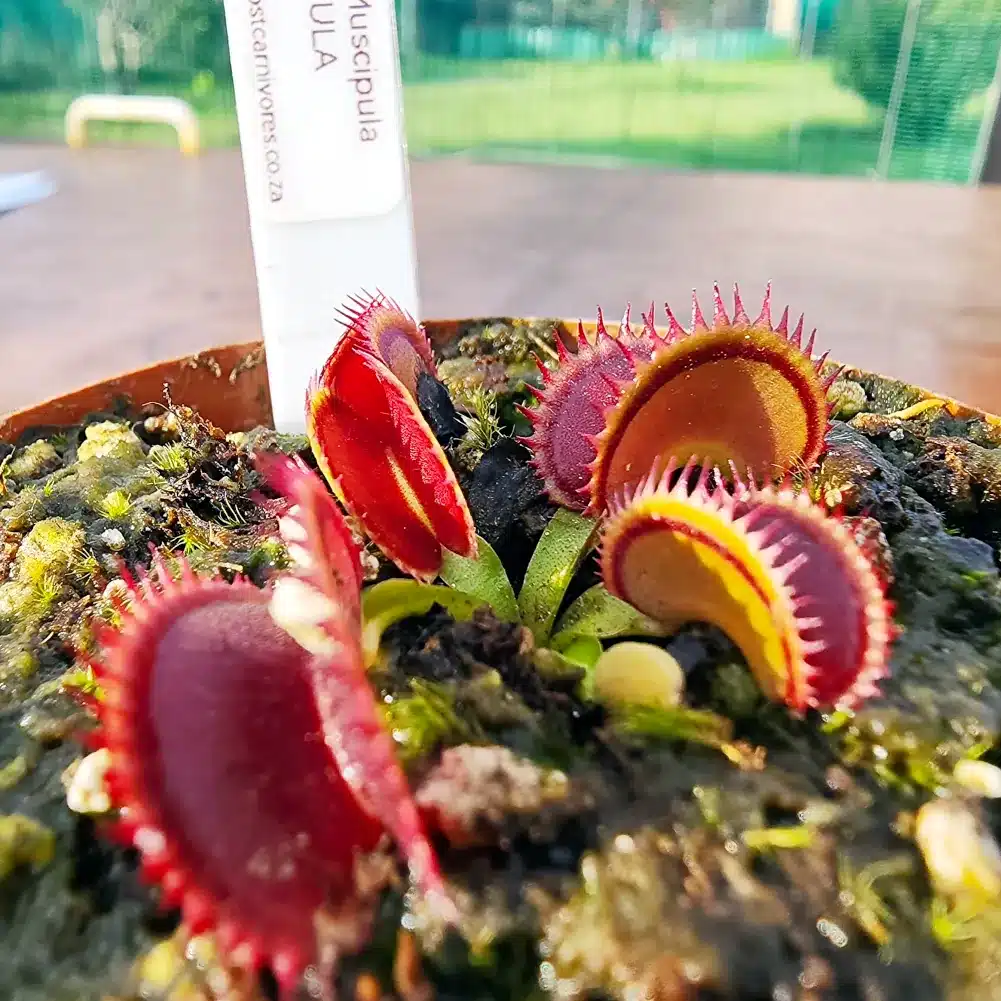
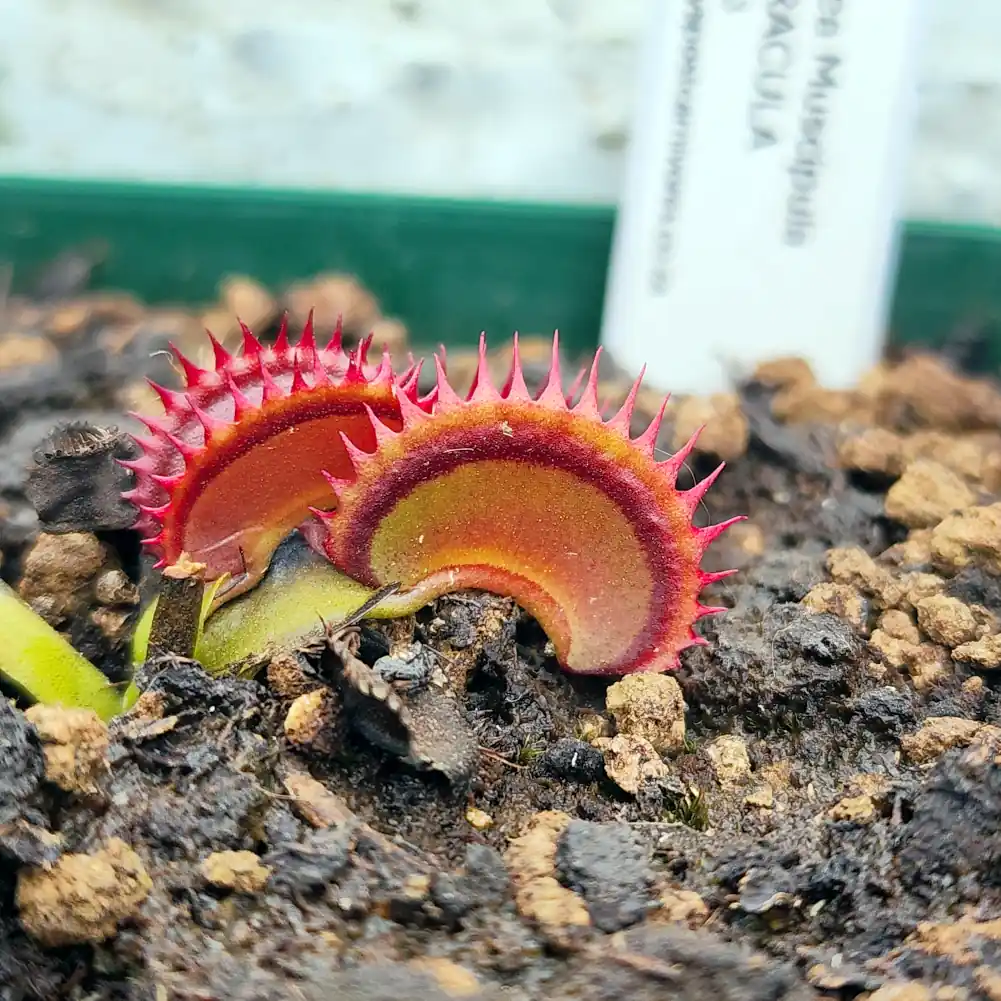
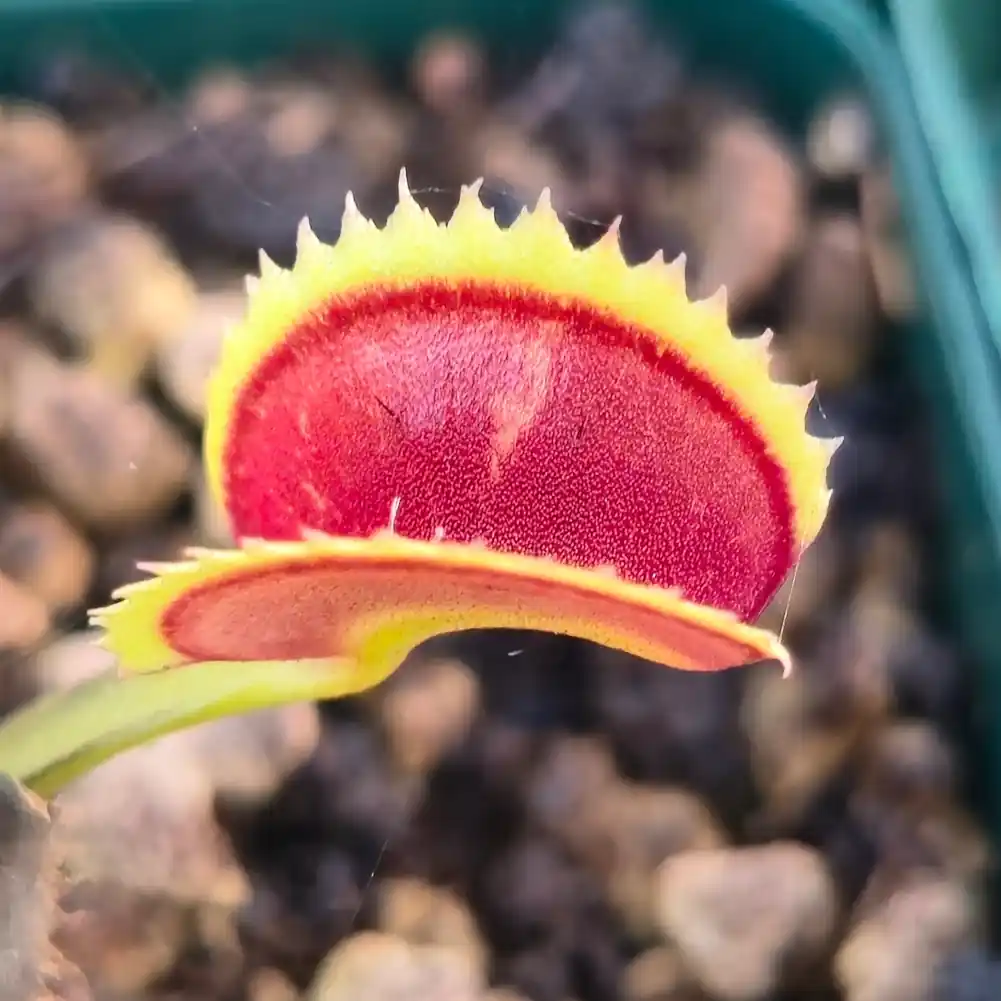
The Venus flytrap is the most infamous of all carnivorous plants. Its “trap” comprises two leaf lobes joined by hinges, which snap shut upon contact with prey due to hair-like projections on their inner surfaces. These hinged traps are lined with tiny bristles that interlock upon closure, preventing the prey from escaping. The Venus flytrap is the only carnivorous plant that uses motion-trapping mechanisms to catch its prey.
Basic Growing Guidelines:
Light: All Venus Fry Traps require MAXIMUM sunlight to grow. This plant is best grown outdoors.
Soil: Our standard carnivorous soil mix is ideal for this plant. (1 part peat to 1 part perlite.)
Feeding: You can supplement feeding with live flies or bugs. Do not feed it freeze-dried or dead bugs, as the traps will not digest the food and re-open wasting energy. A weekly spray of a light foliar fertilizer will also benefit the plant.
Humidity: 50 to 60% on average is ideal.
Water: Keep the soil wet using the tray method but never let the water level get higher than 1/4 of the pot height. Use Reverse Osmosis, Distilled or Rain Water Only.
Temperature: Venus Fly Traps can tolerate very high temperatures, however, if temps get above 40 degrees Celsius for extended periods, water the plant from overhead to help cool the roots.
Dormancy: Venus fly traps require a winter dormancy rest period. During this time traps will die back to low, ground-hugging traps.
A summary of plant care is provided with each plant.
For more detailed information on how to care for your plant, refer to our Care Guides Section.