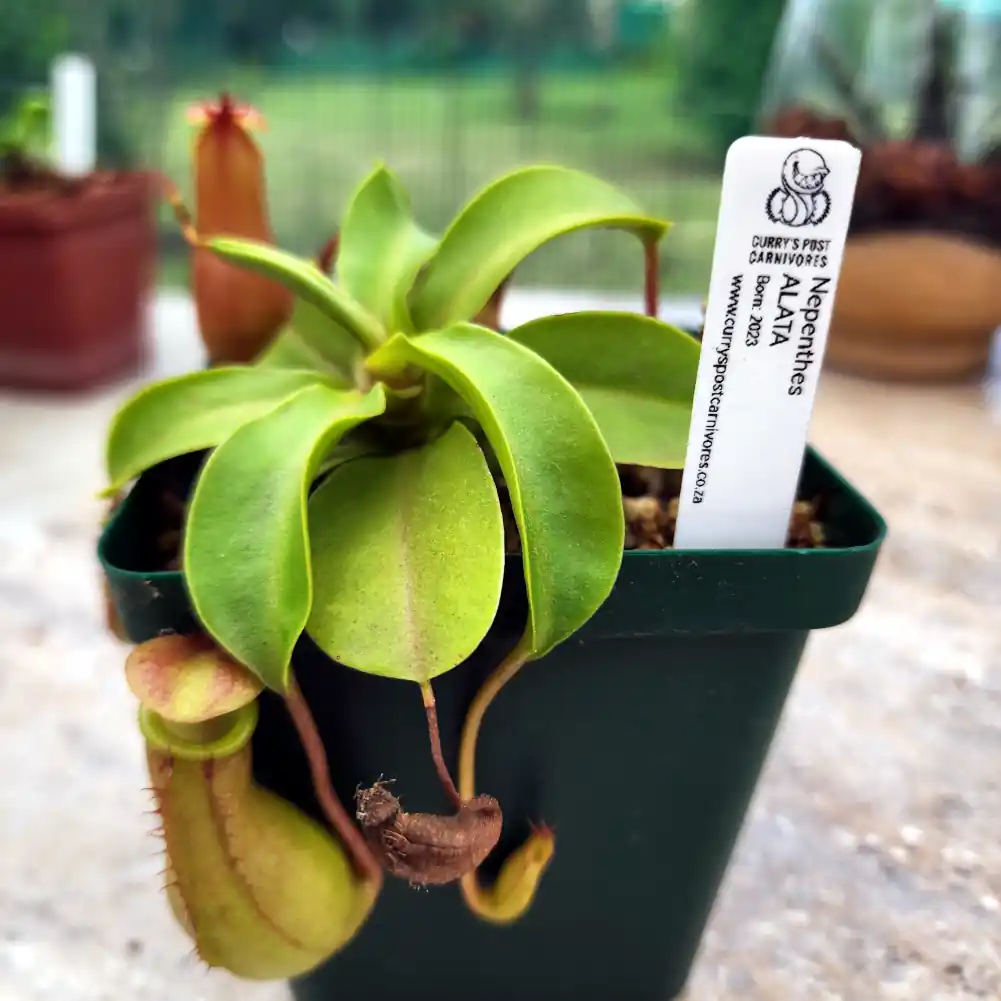
Description
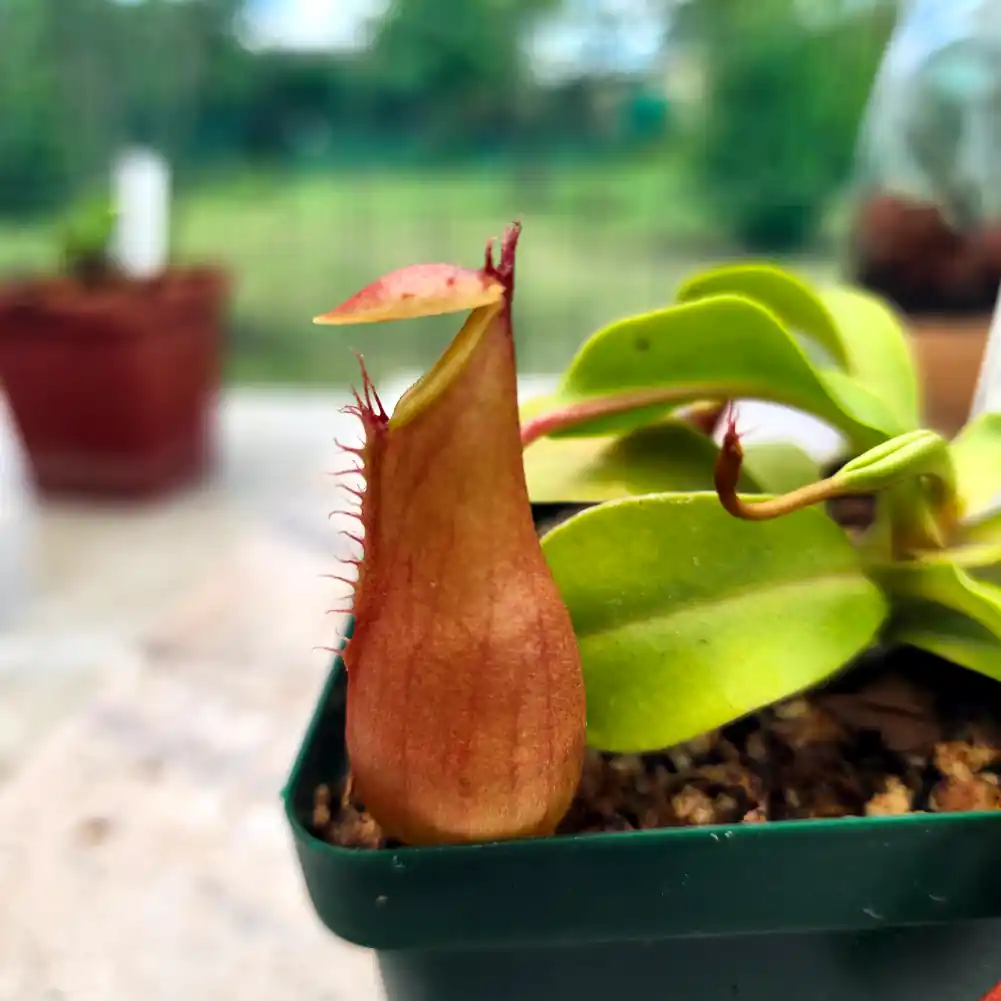
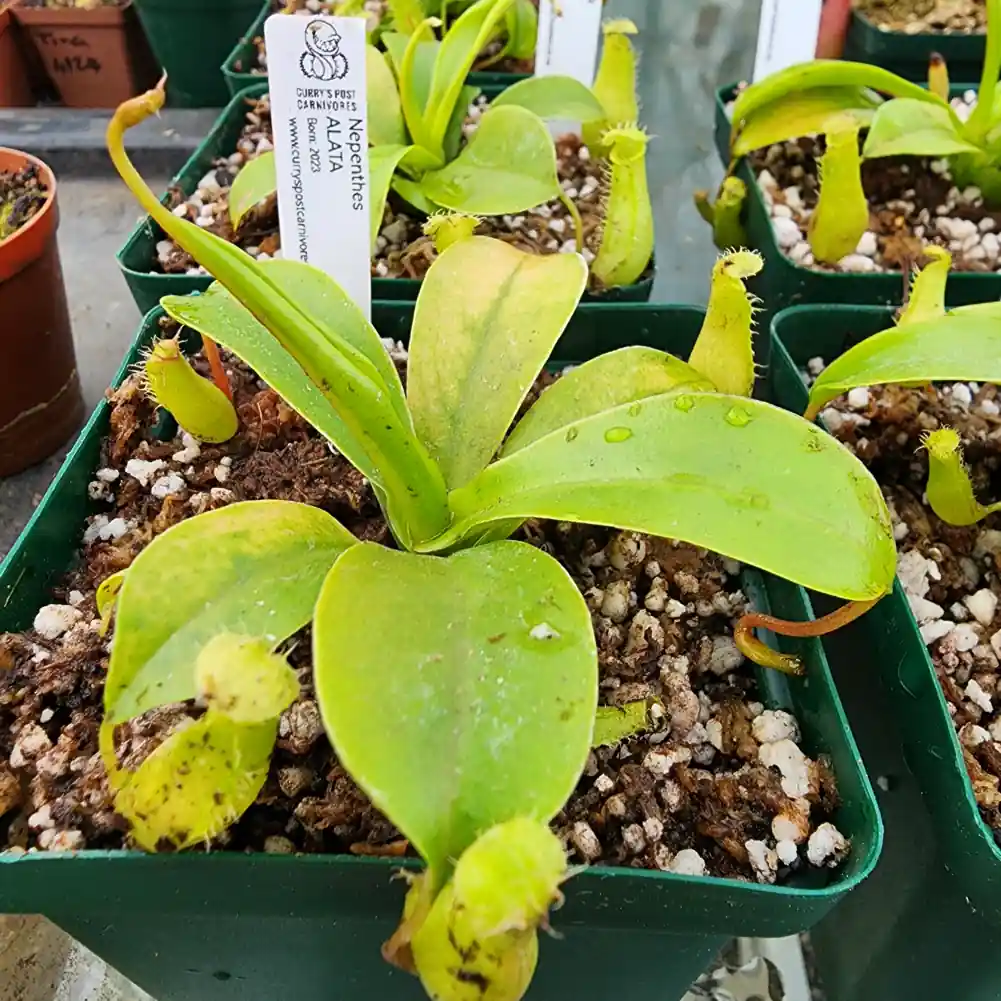
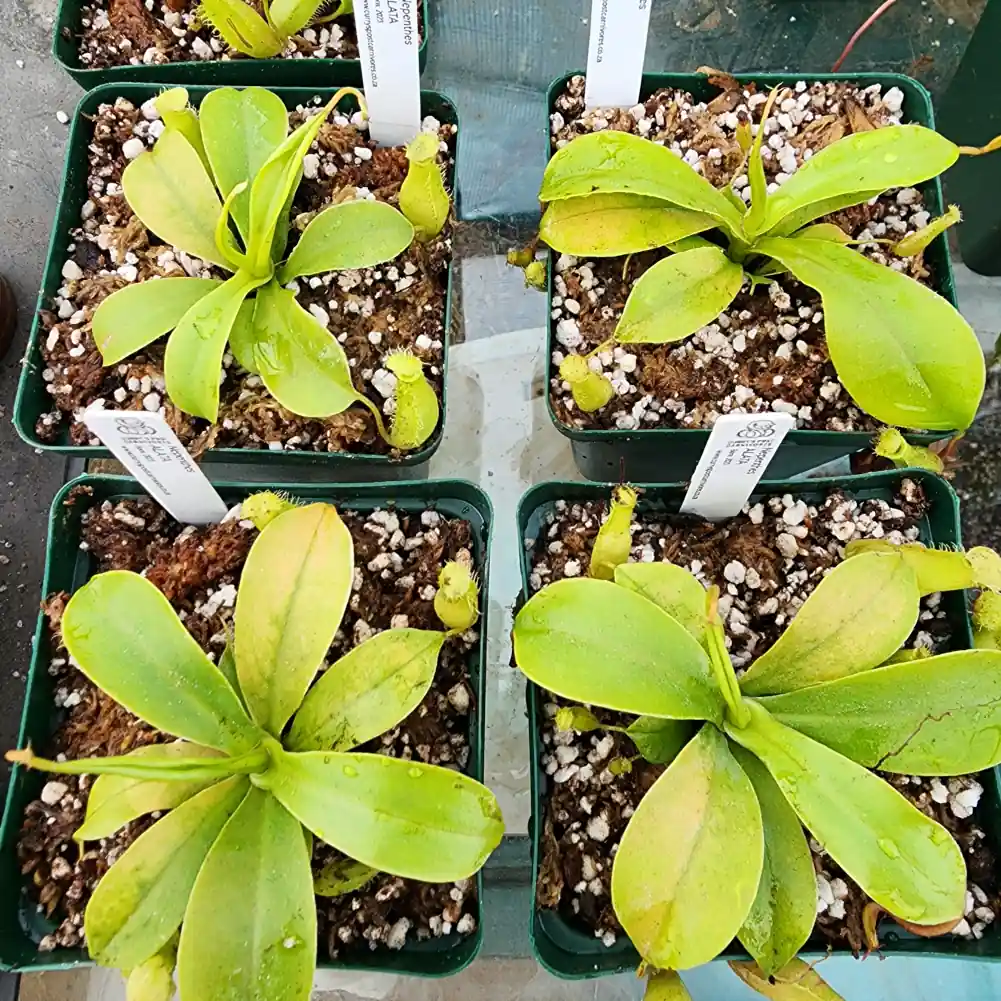
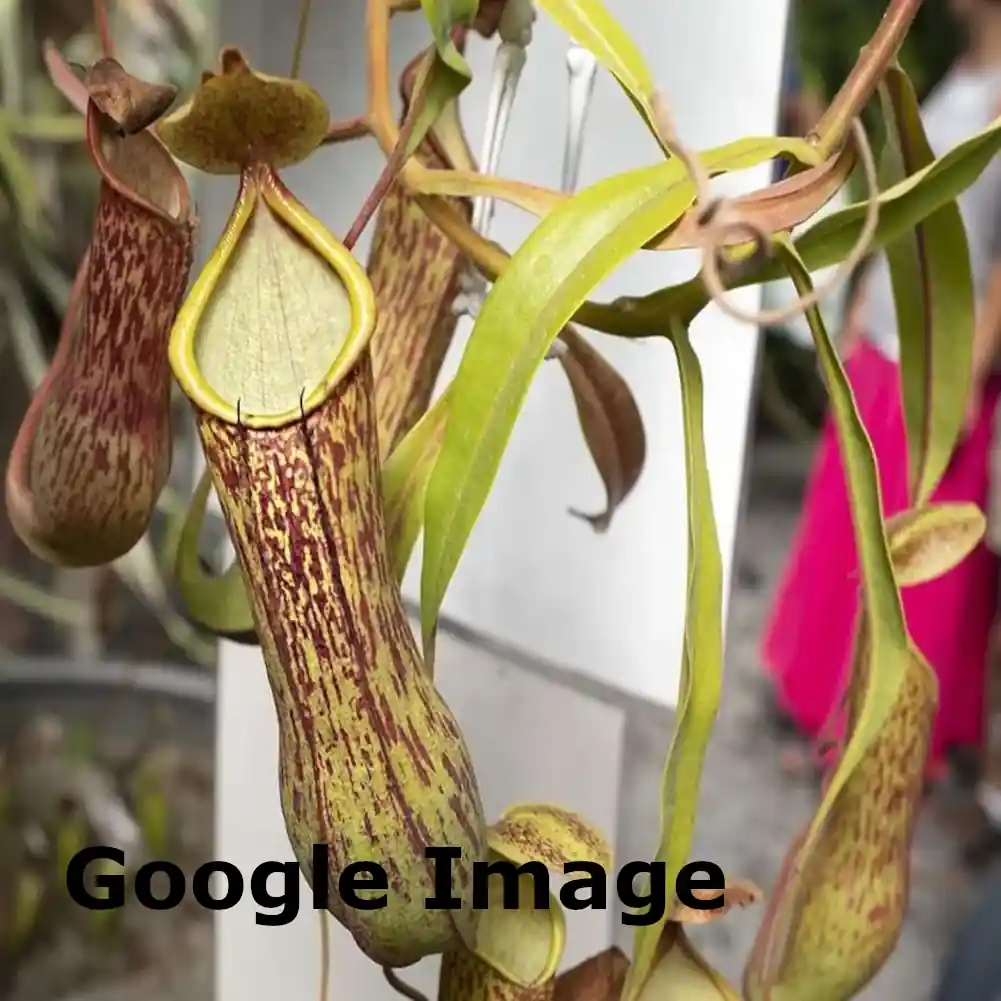
Nepenthes Alata, also known as Monkey Cups or Tropical Pitcher Plants, are a carnivorous plant belonging to the Nepenthaceae family. It’s characterized by its modified leaves that end in pitcher-shaped traps which lure, trap and digest prey, typically insects. These traps contain a fluid that lures insects in, where after falling in, drown and and eventually decompose, providing nutrients for the plant’s growth.
Nepenthes have a diverse habitat. Some prefer hot tropical climates, while others need cooler conditions. It’s vital to know which growing conditions your plant needs to ensure its survival. They are classified into three types: Highland, Intermediate and Lowland.
Refer to the Care Guides Section for Nepenthes, for the Temperature Tolerance Ranges for the various species.
Basic Growing Guidelines for your Nepenthes Alata:
Light: Most Nepenthes enjoy very bright, diffused light. They grow well in an area that receives a few hours of morning or late afternoon sun. Avoid direct afternoon sun as this will burn your plant.
Soil: Nepenthes prefer loose, airy, water-retentive soil. Our Nepenthes mix is a perfect blend creating this balance. (1 part carnivorous soil mix, 1 part sphagnum moss, 1 part akadama stone or perlite)
Feeding: You can supplement feeding by placing fresh dead bugs, dried mealworms, crickets or bloodworms into their pitchers. A weekly spray of a light foliar fertilizer on the leaves, and in the pitchers, will also benefit the plant.
Humidity: 60 to 70% on average is ideal. Too little and young new pitchers will die before developing.
Water: Keep soil damp by watering overhead every few days. More often in hot weather. Continue watering until excess water pours out the bottom of the pot, saturating the soil. DO NOT ALLOW THE POT TO SIT IN WATER. Use Reverse Osmosis, Distilled or Rain Water Only.
Temperature: Various species (Highlanders, Lowlanders and Intermediary) require different temperature ranges. Refer to our care guides for more details on this. Do not expose any of them to low temperatures for any extended periods.
Dormancy: No winter dormancy is needed. Plants can be grown year-round in warm climates or on bright warm indoor spots during cold winters.
A summary of plant care is provided with each plant.
For more detailed information on how to care for your plant, refer to our Care Guides Section.