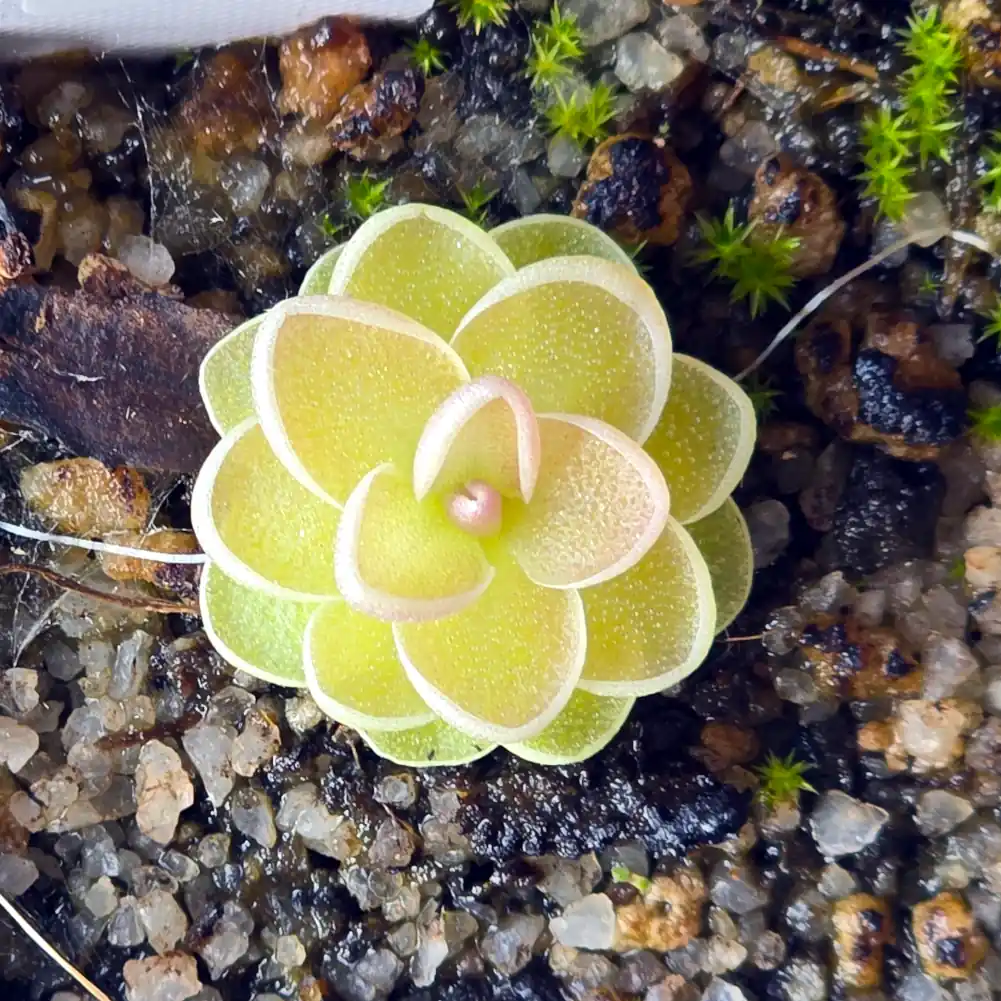


Description
Sundews are part of the Drosera family and are relatively easy to care for so they are great for beginners. They are fascinating hunters, producing a glistening sticky dew on the leaves, which lure insects. When they land, they get glued to the leaf, and this glue starts to digest the insect. Cape Sundews are unique in that they curl their leaves around their victim enlarging the digestive area and digesting the prey much quicker.
Basic Growing Guidelines:
Light: While most Sundews need FULL to PART sun, this particular variety needs FULL Sun all day. This plant is best grown the same as a Venus Fly Trap.
Soil: Our standard carnivorous soil mix is ideal for this plant. (1 part peat to 1 part perlite.)
Feeding: You can supplement feeding with live flies, bugs, or crushed fish food flakes. A weekly spray of a light foliar fertilizer will also benefit the plant.
Humidity: 50 to 60% on average is ideal.
Water: Keep the soil wet using the tray method but never let the water level get higher than 1/4 of the pot height. Use Reverse Osmosis, Distilled or Rain Water Only.
Temperature: Sundews can tolerate very high temperatures, however, dew production will stop if the plant gets too hot.
Dormancy: No winter dormancy is needed but growth will slow in colder climates.
A summary of plant care is provided with each plant.
For more detailed information on how to care for your plant, refer to our Care Guides Section.