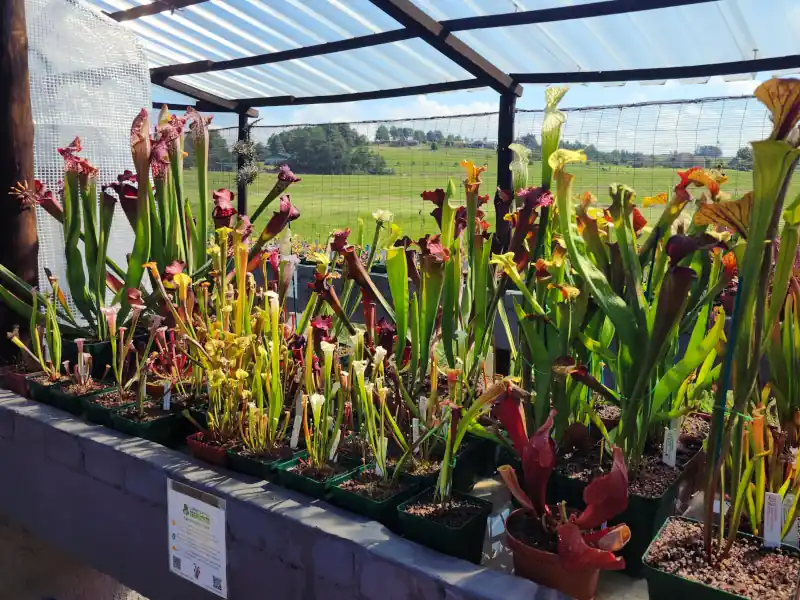
Winter Dormancy – The Great Plant Snooze 🌿❄️
So… Your Carnivorous Plant Suddenly Looks Like It’s Dying?
Every year as autumn starts to roll in, many carnivorous plants begin looking a little… worse for wear. Traps shrink, pitchers dry up, and suddenly your once proud plant looks like it’s having a very VERY bad day.
This is usually the moment when new Carnie parents start to panic – and it takes every ounce of self-control not to dial 9-1-1. It’s also around this time that my inbox starts filling up with messages that go something like this:
“Lee… I think my plant is dying!!! What am I doing wrong? 😭”
Take a deep breath… Exhale… 😄 Your plant is not dying. It’s just getting ready for bed! 😄
This natural process is called winter dormancy, and it is a completely normal part of the life cycle for many carnivorous plants. In fact, for some species, it is absolutely essential for long-term health.
Is My Plant Dead or Just Dormant ❓
Your plant is probably dormant if:
✔ Leaves are brown, but the base is firm
✔ Growth slowed in autumn
✔ The crown or rhizome is still solid
✔ New growth is still possibly appearing
Your plant may be dead if:
✘ The base is mushy and soft
✘ The soil smells rotten, like old, dirty, stagnant water
✘ The crown collapses, and the plant disintegrates when you gently tug at it.
So what is Dormancy?
Dormancy is triggered by shorter daylight hours and cooler temperatures, allowing temperate carnivorous plants to conserve energy until spring. It’s simply the plant’s way of slowing down during winter so it can come back stronger in springtime. So before you reach for the Valium or start planning a funeral for your plant babies… let’s take a look at what’s really happening.
Which Carnivorous Plants Need Winter Dormancy?
Not all carnivorous plants experience dormancy. Some species come from warm tropical climates and grow happily all year round. Others come from colder temperate regions and require a winter rest period.
Here’s a simple guide:
✔ = Dormancy is NOT optional – it’s a necessary part of its life cycle.
Venus Fly Trap ✔
Sarracenia (Trumpet Pitchers) ✔
Darlingtonia (Cobra Lily) ✔
Temperate Drosera (Sundews) ✔
❌ = No Dormancy is required, and if grown with correct lighting indoors, will grow throughout the year. However, in colder climates, growth WILL slow down significantly, and may even stop completely. Nepenthes for EG, may even stop producing pitchers.
Drosera Capensis (Cape Sundews) ❌
Nepenthes (Monkey Cups) ❌
Heliamphora ❌
Utricularia (Bladderworts) ❌
Mexican Butterworts ✔ & ❌
Cephalotus ✔ & ❌
A Special Note About Cephalotus & Butterworts 🤔
Cephalotus and Butterworts behave a little differently during winter. They don’t go as fully dormant as Venus flytraps or Sarracenia do. Instead, they enter what we call a semi-dormant phase. Let me explain:
Butterworts switch from their carnivorous form into a more succulent-like state. The leaves become smaller, tighter, and more compact, and they lose their sticky insect-catching surface. Growth slows right down during this time.
Cephalotus also change their strategy slightly during winter. Instead of producing lots of pitchers, they start pushing out more regular leaves. Digesting insects requires energy, and when sunlight is reduced, the plant grows more leaves so it can gather more energy from sunlight instead. Some of the pitchers may dry up or die off during this period, but as long as the leaves remain healthy, your plant is doing exactly what it should.
So what Does Dormancy Look Like?
This is the part that scares people the most. During winter dormancy, your plant may look absolutely terrible, EXACTLY like it’s supposed to 🤔
You may notice:
- Leaves turning brown or black
- Traps are becoming smaller and lying flat on the soil
- Pitchers drying up and collapsing
- Growth is slowing down dramatically
- The plant looks half dead
It’s also worth noting that not all plants start their winter snooze at exactly the same time. Some begin winding down earlier than others, which means you might have a few plants that suddenly look like they’re giving up on life… while others right next to them still look perfectly happy and full of energy.
That’s completely normal. Plants, like people, all run on slightly different schedules. Some of us aren’t great at late nights either. 😉
On the flip side, some Sarracenia actually start coming into their own during the cooler weather, and may look happier than ever just as other plants are slowing down. So this time of year can feel a little confusing, with some plants snoozing while others are still showing off, but rest assured, that’s just nature doing its thing and showing off 😉
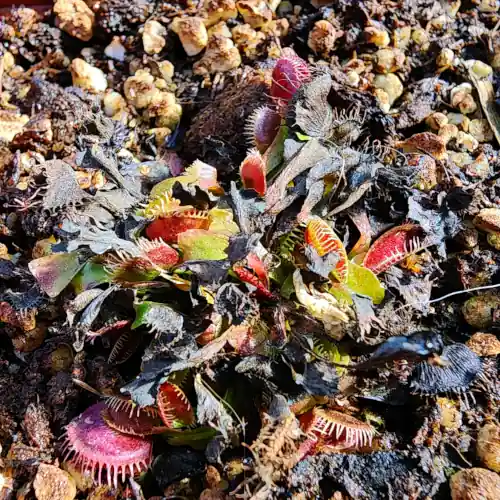
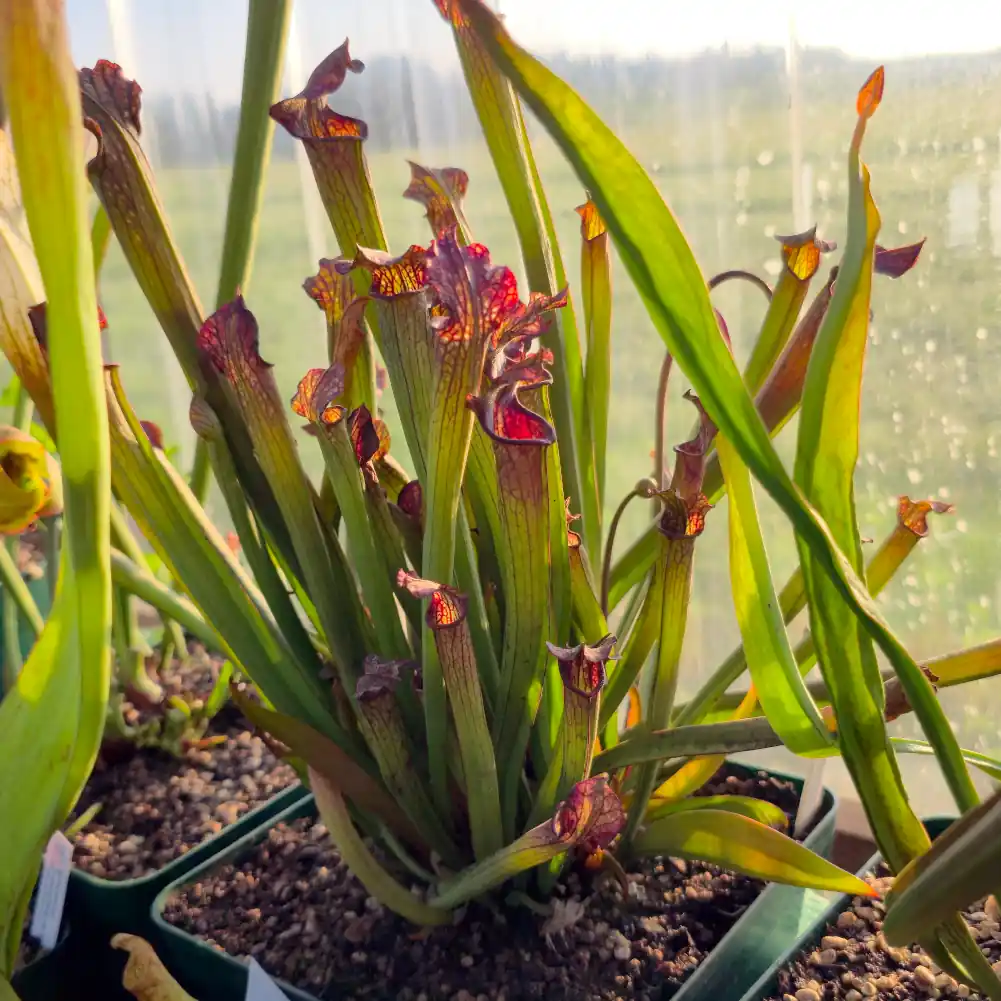
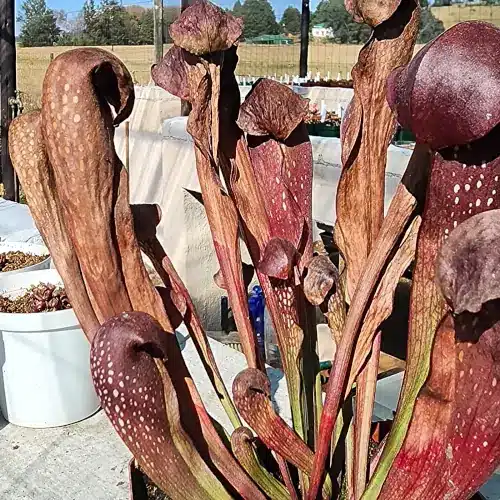
Visual Example of Dormancy: (Active Growth vs Dormant State)
Venus Fly Trap

Sarracenia Trumpets
Drosera Sundew
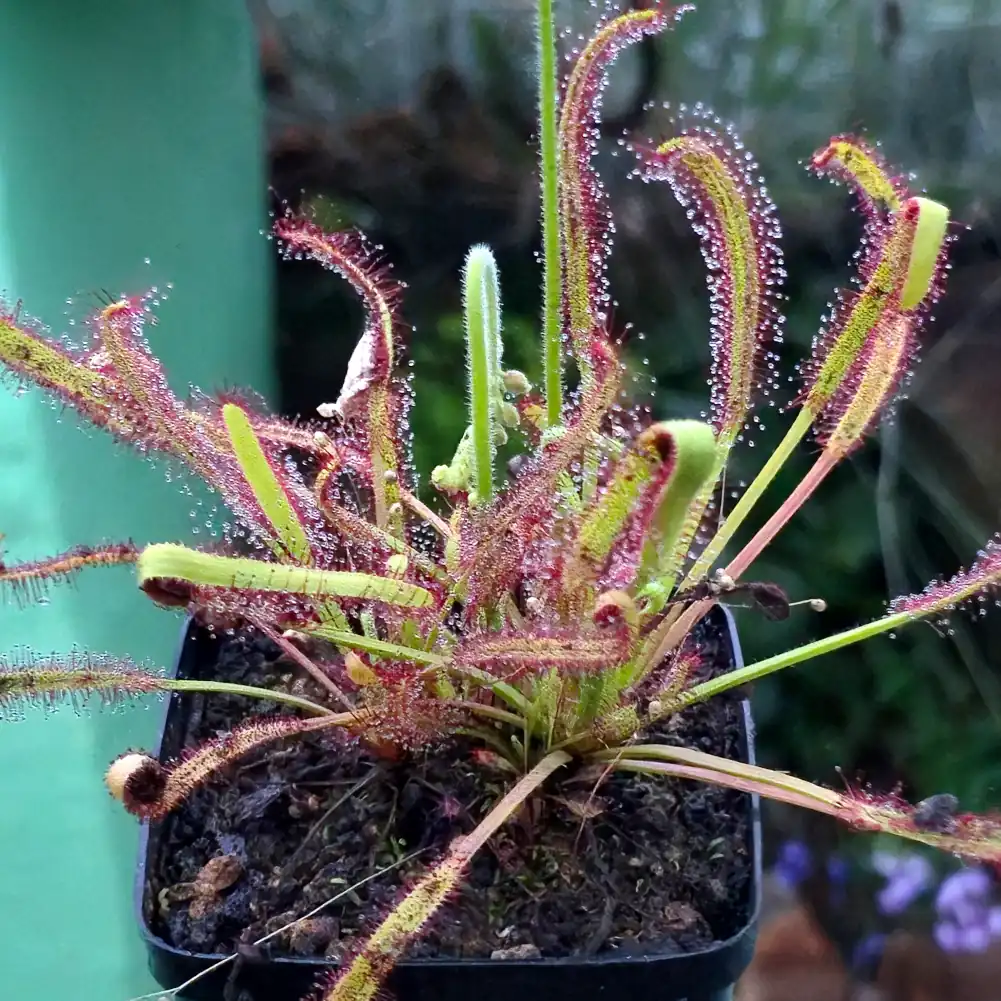
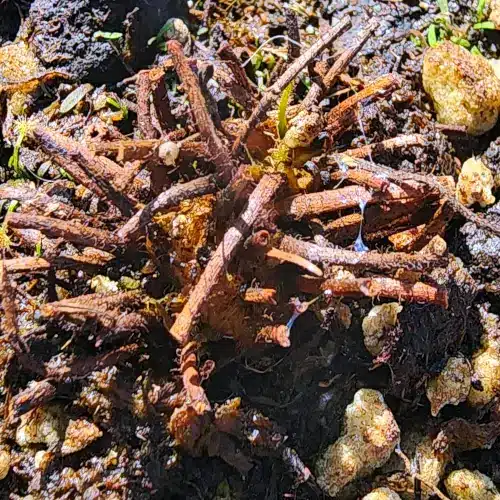
Why Is Winter Dormancy Important?
- Energy conservation: Less sun = less energy. The plant gets 99% of all its energy from the sun. Eating insects is just a bonus.
- Dormancy lets the plant survive the winter on reserves.
- Healthy life cycle: Like we need sleep to recharge, dormancy lets your plant reset for strong spring growth.
- Survival strategy: It’s how these plants evolved to cope with cold winters and a lack of prey.
Dormancy Timeline:
For most growers in South Africa, dormancy usually follows a pattern like this:
March – April: Growth begins slowing
May: Traps and pitchers shrink and start dying back significantly
June – July: Plant enters full dormancy and may look dead!
August: Plants SLOWLY begin to wake up, and every new bit of growth feels like cause for Celebration 🥂
September – October: Strong new growth begins
Winter Dormancy Care Checklist
Dormancy care is actually very simple. During winter:
✔ Reduce watering. If using the tray method, leave the tray dry for a day or 2 before refilling.
✔ Keep soil damp but not waterlogged
✔ Stop feeding the plant
✔ Remove dead leaves or pitchers
✔ Keep plants outdoors where possible
✔ Protect from extreme frost
Dormancy typically lasts 3 to 5 months depending on climate and species. Some plants enter dormancy much later, whilst others can’t wait to go to bed 😄
Common Dormancy Mistakes
Most problems happen when well-meaning plant parents accidentally interfere with dormancy.
Avoid these common mistakes
❌ Throwing the plant away because it looks dead
❌ Bringing the plant into warm indoor conditions
❌ Completely stopping watering
❌ Trying to force growth with feeding, fertilizers or indoor grow lights.
A Quick Word on Trimming
Winter is actually a great time to give your plants a little haircut and move them in bigger homes if needed.
Removing dead pitchers and leaves helps the plant look tidier and prevents mould from forming. Its also a great time of year to split and / or replant your babies into bigger pots.
I have a detailed Blogs on:
Trimming and Pruning your Babies HERE.
Repotting your Babies HERE.
Splitting your Venus Fly Traps HERE.
And Splitting your Sarracenias HERE.
Final Thoughts 🌿
Dormancy can look scary, especially if you are a first-time carnivorous plant parent. But once you understand what’s happening, it becomes much less stressful. Your plants are simply resting for the winter so they can explode back to life in spring. And when they wake up again, they will be bigger, stronger, and hungrier than ever.
So don’t panic if your plants look a little sad during winter, they’re just having a well-earned snooze.
Below is a quick summary of what we have been talking about, in an easy-to-read Q&A format:
Frequently Asked Questions About Winter Dormancy ❓
👉Why does my Venus Fly Trap look like it’s dying in winter?
This is almost always normal winter dormancy. As temperatures drop and daylight hours shorten, Venus Fly Traps naturally slow their growth and older traps begin to die back. The plant is not dying — it is simply resting until spring.
👉Should I cut off dead traps and pitchers?
Yes. During dormancy it’s perfectly fine to trim off brown or dead leaves. This helps keep the plant tidy and prevents mould from forming around the crown.
👉Should I keep watering my carnivorous plants in winter?
Yes – but slightly less. The soil should remain damp, not soaking wet. Never allow the soil to completely dry out.
👉Should I feed my carnivorous plants during dormancy?
No. During dormancy the plant’s metabolism slows down and it does not need additional food. Feeding during this period can actually stress the plant.
👉How long does winter dormancy last?
For most temperate carnivorous plants, dormancy lasts about 3–5 months, typically from late autumn through winter until early spring.
👉Will my plant recover in spring?
Absolutely. Once temperatures warm and daylight increases, your plant will wake up and begin producing fresh new traps and pitchers.
Still Unsure?
If you’re ever unsure about what your plant is doing, please don’t hesitate to get in touch. My contact details are on the website, or you can simply click the WhatsApp button below and tell me what’s worrying you.
I know how stressful it can feel when your beautiful plant babies suddenly start looking a little worse for wear, so if you need a little reassurance along the way, I’m always happy to help guide you through the process.
After all… that’s what the Curry’s Post Carnivores family is here for. 🌿
Trust the snooze… your Hungry Little Savages will be back on the hunt before you know it. 🪰🌱